Why Traditional Gyms Don’t Work After Age 40 (And What to Do Instead)
Are Traditional Gyms Even Less Effective After 40?
Yes—traditional gyms are not effective at any age but become even less effective after 40 because your body no longer responds to exercise the same way it did in your 20s and 30s. Hormonal changes, slower recovery, and muscle loss make outdated workout methods even more inefficient and, in many cases, counterproductive.
Many people over 40 find themselves working out more but seeing fewer results. This isn’t due to lack of effort—it’s because traditional gym routines are not designed to compensate for the physiological changes that come with aging. At Leo’s Fitness Lab, we address these changes with a more efficient, science-based approach that prioritizes results over time spent.
Why Your Workouts Stop Working After 40
1. Age-Related Muscle Loss (Sarcopenia)
After age 30, adults naturally begin to lose muscle mass—a condition known as sarcopenia. This process accelerates after 40, making it harder to build and maintain strength.
Traditional gyms often emphasize:
- High repetition workouts
- Cardio heavy routines
- Low-intensity training
These methods do little to build muscle and even less to combat muscle loss. Without proper stimulus, your body continues to lose strength and metabolic efficiency.
This is where advanced resistance systems like ARX training become far more effective. By providing adaptive, computer-controlled resistance, ARX ensures muscles are fully fatigued in a safe and efficient way—something traditional weights often fail to achieve. And muscles must be fully fatigued in order to grow stronger.
2. Slower Recovery Times
As you age, your body requires more time to recover from workouts. Traditional gym programs often ignore this, encouraging frequent training sessions that can lead to fatigue, inflammation, and even injury.
Instead of improving results, overtraining can:
- Stall progress
- Increase soreness
- Reduce consistency
Recovery is not optional – it is a critical part of getting results at any age but especially after 40.
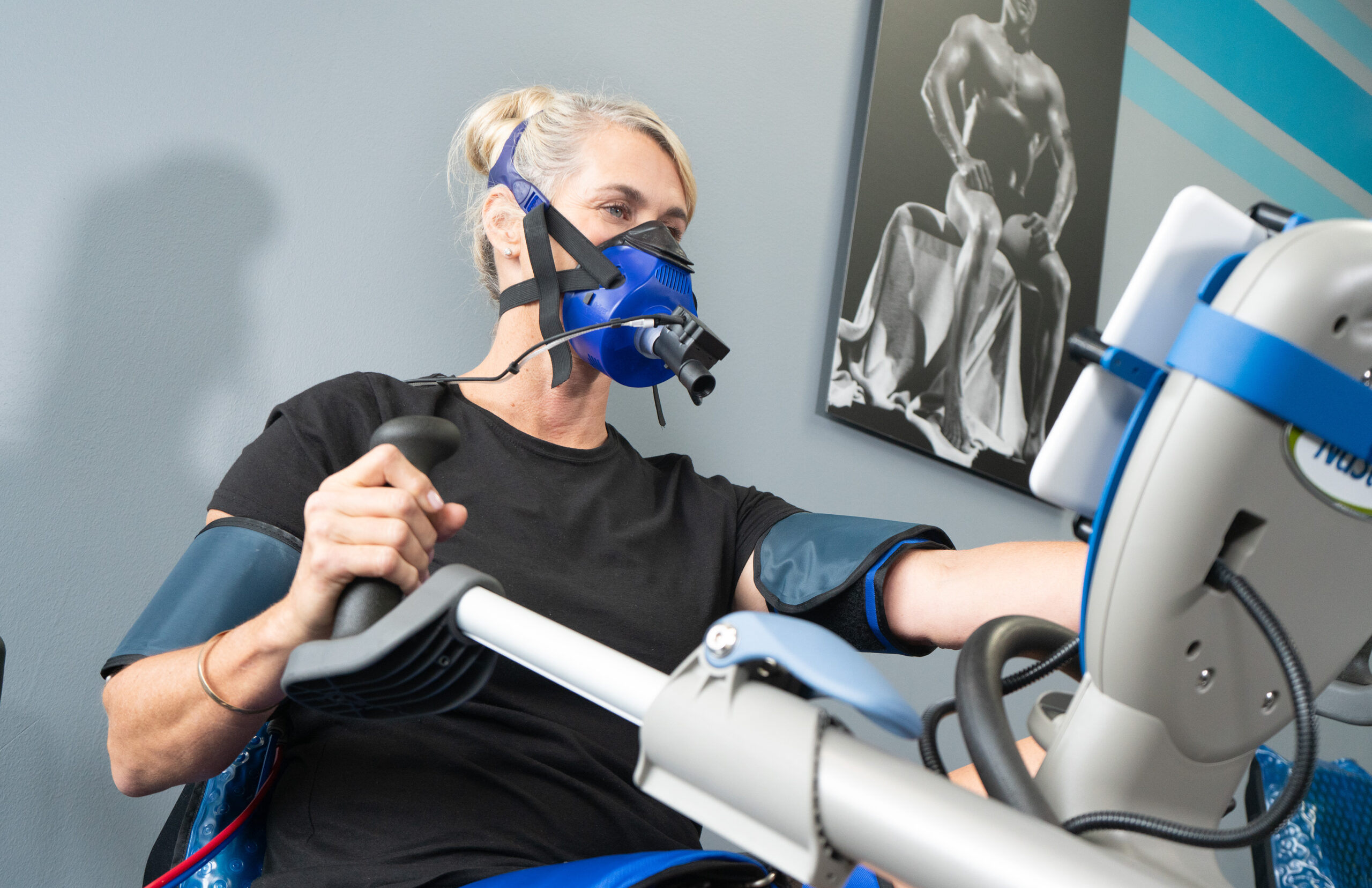
Technologies like Vasper help accelerate recovery by combining compression, cooling, and interval training. This allows your body to recover faster while still achieving a high level of cardiovascular and metabolic benefit—without the wear and tear of traditional cardio.
3. Hormonal Changes Affect Performance
Hormonal shifts – including declines in testosterone, growth hormone, and estrogen – directly impact your ability to build muscle and burn fat.
This means:
- Longer workouts don’t equal better results
- Excessive cardio can actually work against you
- Intensity matters more than duration
Traditional gym environments rarely account for these changes, leading to inefficient workouts.
High-intensity, controlled systems like ARX are specifically designed to maximize output in a short period of time, aligning with how the body responds best as it ages.
4. Inefficient Workouts Waste Time
Many gym routines rely on volume—more sets, more reps, more time. But at any age, and especially after 40, efficiency becomes far more important than effort.
Spending 60–90 minutes in the gym:
- Doesn’t guarantee better results
- Increases fatigue without maximizing output
- Is often unsustainable for busy professionals
The reality is that most traditional workouts are not optimized for results—they are optimized for activity.
In contrast, technology-driven training like ARX allows you to achieve maximum muscular output in as little as 20 minutes, eliminating wasted time while delivering measurable results.
What Actually Works After 40
1. High-Intensity, Low-Volume Strength Training
The most effective workouts after 40 focus on brief, high-intensity strength training sessions. This approach stimulates muscle growth while minimizing wear and tear on the body.
Benefits include:
- Increased muscle mass
- Improved metabolism
- Reduced joint stress and injury
- Faster recovery
At Leo’s Fitness Lab, ARX computerized equipment automatically adjusts resistance in real time, ensuring every second of the workout is optimized for maximum results. Every exercise includes resistance during the “negative” or lowering phase of the exercise, when your body can handle 20-60% more weight than in the “positive” or lifting phase. This vastly accelerates muscle and strength building.
Short, focused sessions deliver far better results than long, repetitive workouts.
2. Data-Driven, Measurable Progress
After 40, guessing doesn’t work. Tracking strength, body composition, and performance metrics is essential for consistent progress.
Effective training should include:
- Objective strength measurements
- Body composition tracking
- Progressive overload based on data
When results are measurable, progress becomes predictable.
Advanced systems like ARX provide real-time data on a computer screen showing today’s workout compared to your last workout. The screen shows force output, strength curves, and progress over time, removing the guesswork from training entirely.
Using state of the art equipment available at Leo’s Fitness Lab, the Bod Pod can be used to measure body composition at the start of an exercise program and at intervals during the program to ensure that muscle is gained and only fat is lost.
3. Optimized Recovery and Frequency
Working out less—but more effectively—is key.
Most people over 40 benefit from:
- 2 focused workouts per week
- Adequate recovery between sessions
- Reduced unnecessary physical stress
This allows the body to rebuild stronger instead of constantly breaking down.
Use of the Vasper recovery system available at Leo’s Fitness Lab complements this approach by delivering cardiovascular conditioning and recovery support in a fraction of the time, helping clients stay consistent without overtraining.
4. Strength Training for Longevity
After 40, fitness is no longer just about appearance—it’s about long-term health and functionality.
Building strength supports:
- Bone density
- Joint stability
- Metabolic health
- Independence as you age
Muscle is one of the most important predictors of longevity and quality of life.
Efficient, high-intensity systems like ARX allow you to build this strength safely and effectively, in the least amount of time.
Why Traditional Gyms Don’t Adapt to These Needs
Traditional gyms are designed as inexpensive substitutes for effective exercise for use by the general population. They are not efficient and effective for muscle and strength building, and especially not for individuals over 40 with specific physiological needs.
They typically lack:
- Personalized programming with negative reps
- Recovery-focused training models
- Measureable performance tracking
- Time-efficient systems
Because traditional gyms are considered “affordable,” many people continue using outdated methods that no longer produce results.
At Leo’s Fitness Lab, advanced systems like ARX, Bod Pod, and Vasper are specifically used to deliver efficient, measurable, and results-driven training.
A Smarter Approach to Fitness After 40
To continue making progress, your approach to fitness must evolve with your body.
The most effective strategy includes:
- Brief, high-intensity strength sessions
- Technology-assisted training for precision
- Structured recovery periods
- Data-driven progress tracking
This approach reduces wasted time while maximizing results.
By integrating tools like ARX for strength, Vasper for recovery and conditioning, and Bod Pod for monitoring, workouts become more efficient, safer, and significantly more effective.
The Bottom Line: Train Smarter, Not Longer
Traditional gyms don’t work after 40 not because fitness becomes impossible—but because the methods employed are outdated and cannot adjust to your body’s age-appropriate needs.
By shifting to a more efficient, science-based approach, it’s possible to:
- Build strength
- Improve body composition
- Increase energy levels
- Support long-term health
At Leo’s Fitness Lab, this approach is built into every session—delivering better results in less time.
Frequently Asked Questions (FAQ)
Why do workouts feel harder after 40?
Workouts feel harder due to muscle loss, hormonal changes, and slower recovery. Your body requires more targeted and efficient training methods to achieve the same results.
Can you still build muscle after 40?
Yes, building muscle after 40 is absolutely possible with the right strength training approach, proper intensity, and adequate recovery.
How often should you work out after 40?
Most people over 40 benefit from 2 high-quality strength training sessions per week, allowing time for recovery and muscle growth.
Is cardio effective for weight loss after 40?
Cardio alone is not effective in general and even less effective after 40. Strength training and efficient systems like Vasper provide better metabolic and fat-loss benefits in less time.
What is the best type of workout for people over 40?
High-intensity strength training with low volume, combined with proper recovery and technology-assisted methods like ARX, is one of the most effective approaches for any age, but especially for people over 40.
Why am I not seeing results from the gym anymore?
You may not be seeing results because traditional workouts are not designed to build muscle effectively. As you age, ineffective workouts are not aligned with your body’s current needs, especially regarding intensity, recovery, and muscle stimulation.
How long should workouts be after 40?
Effective workouts can be as short as 20–30 minutes when performed with proper intensity and advanced equipment that maximizes output.
Is personal training worth it after 40?
Personal training can be highly valuable after 40, especially when it includes data tracking, proper programming, and efficient workout design using advanced systems. Having an expert coach on hand to ensure your exercise program maximizes effectiveness and minimizes injury is important at any age but especially for people over 40.
What happens if you don’t strength train after 40?
Without strength training, muscle loss accelerates, metabolism slows, and the risk of injury and chronic conditions increases.
How do I restart fitness after 40?
Start with a structured, low-frequency strength training program focused on intensity, proper form, and measurable progression using modern, efficient training methods. Using the systems at Leo’s Fitness Lab, you can gain strength with every session.